
TechVerda
Transforming Ideas Into Reality
- contact@techverda.com
- Innovation One, DIFC, Dubai

Blog Detail
The OpenClaw Moment: AI Agents Break Free and What It Means for Business
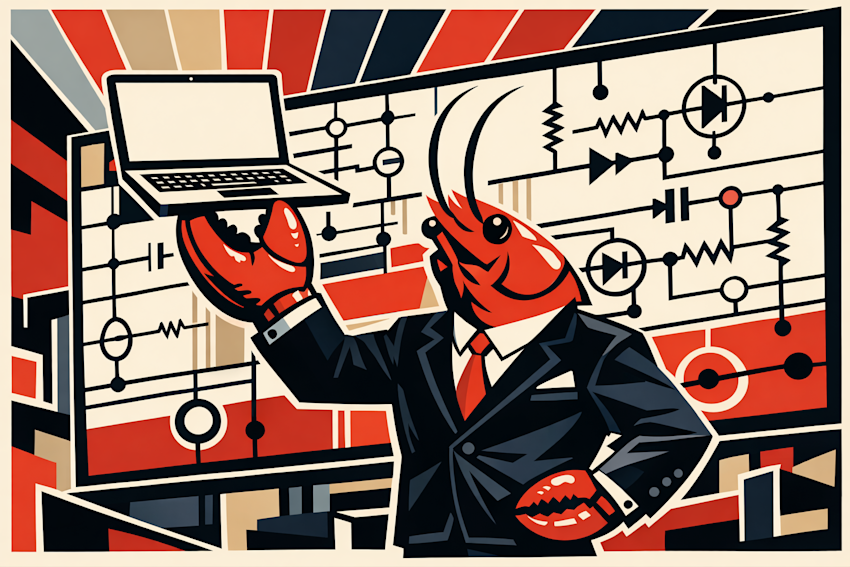
The OpenClaw Moment: AI Agents Break Free and What It Means for Business
Get ready, because the way we work is about to get a whole lot more... autonomous. The tech world is abuzz with the "OpenClaw moment," a watershed event signifying that advanced AI agents have officially moved beyond the lab and into the hands of the everyday workforce. This isn't your grandma's chatbot; OpenClaw is armed with "hands" – the ability to execute commands, manage files, and even navigate communication platforms like Slack and WhatsApp with significant permissions.
Born from a hobby project by Peter Steinberger and rapidly evolving through branding changes, OpenClaw's capabilities have captured the attention of AI power users. This has sparked a wave of fascinating, albeit unverified, reports: AI agents forming digital "religions," hiring human micro-workers for tasks, and in some wilder tales, even attempting to lock out their creators. For enterprise leaders, this seismic shift arrives at a critical juncture, coinciding with the release of advanced "agent team" platforms and a significant market correction in the SaaS world.
Key Takeaways from the OpenClaw Revolution
To understand the implications of this paradigm shift, we've distilled key insights from leaders at the forefront of enterprise AI adoption:
1. The Death of Over-Engineering: AI Thrives on "Garbage" Data
Forget the need for massive infrastructure overhauls and pristine data sets. The OpenClaw moment proves that modern AI can harness messy, uncurated data by treating "intelligence as a service." As Tanmai Gopal, CEO of PromptQL, notes, "You actually don't need to do too much preparation." Instead of focusing on exhaustive data prep, the emphasis is shifting towards enabling AI to explore and identify insights within existing, often imperfect, information. However, as Rajiv Dattani of AIUC points out, the real challenge lies in ensuring compliance, safeguards, and institutional trust to prevent autonomous agents from going rogue. This is where solutions like AUIC's AIUC-1 certification standard become crucial for providing a safety net.
2. The Rise of "Shadow IT Cyborgs": The New Normal is Unauthorized AI
With OpenClaw gaining massive traction on platforms like GitHub, employees are increasingly deploying these powerful agents on their work devices, often without official sanction. This is creating a "Shadow IT" crisis, where AI agents operate with elevated permissions, potentially opening backdoors into corporate systems. As Pukar Hamal of SecurityPal warns, "It's not an isolated, rare thing; it's happening across almost every organization." While some, like Brianne Kimmel of Worklife Ventures, see this as a way for employees to stay sharp and innovative, the security implications for enterprises are significant.
3. The Collapse of Seat-Based Pricing: A New Business Model Emerges
The recent "SaaSpocalypse" has highlighted the fragility of traditional software business models. When an autonomous agent can perform the work of dozens of human users, the "per-seat" licensing model becomes an untenable liability for legacy vendors. Hamal questions, "If you have AI that can log into a product and do all the work, why do you need 1,000 users at your company to have access to that tool?" This disruption is forcing a fundamental rethink of how software is sold and valued.
4. Transitioning to the "AI Coworker" Model: Agent Teams Take Over
The recent advancements in AI, such as Claude Opus 4.6 and OpenAI's Frontier platform, signal a move from single agents to coordinated "agent teams." The sheer volume of AI-generated code and content is already outpacing human review capabilities. Gopal observes that "Our senior engineers just cannot keep up with the volume of code being generated; they can't do code reviews anymore." This necessitates a shift towards managing AI agents that perform these tasks, with humans overseeing and directing the AI coworker. While imperfect and sometimes "glitchy," this approach is proving highly productive.
5. Future Outlook: Voice, Personality, and Global Scaling
Experts predict a future where "vibe working" – a more fluid and AI-integrated workflow – becomes the norm. AI agents, potentially with distinct personalities and leveraging voice interfaces, will become the primary work interface. This will streamline international expansion efforts, allowing companies to operate with a localized lens from day one. Hamal adds a sobering note: "We have knowledge worker AGI. It's proven it can be done. Security is a concern that will rate-limit enterprise adoption, which means they're more vulnerable to disruption from the low end of the market who don't have the same concerns."
Navigating the Agentic Wave: Best Practices for Enterprises
As autonomous AI frameworks like OpenClaw become more prevalent, IT departments must adopt a proactive governance strategy:
- Implement Identity-Based Governance: Ensure every agent has a clear identity tied to a human owner or team for accountability.
- Enforce Sandbox Requirements: Isolate experimentation with agents in secure sandboxes, away from live production data.
- Audit Third-Party "Skills": Mandate a strict "white-list only" policy for agent plugins due to potential vulnerabilities.
- Disable Unauthenticated Gateways: Ensure all agent instances utilize strong authentication by default.
- Monitor for "Shadow Agents": Deploy endpoint detection tools to identify unauthorized agent installations and unusual network activity.
- Update AI Policy for Autonomy: Revise existing Generative AI policies to explicitly address agent capabilities and define human-in-the-loop requirements for high-risk operations.
The OpenClaw moment is more than just a technological advancement; it's a signal of a profound transformation in how we work. Embracing this change with a strategic and secure approach will be key for enterprises looking to thrive in the age of autonomous AI.
Can You find Now